Quality Tolerance Limits (QTLs) in Clinical Trials

Quality tolerance limits (QTLs) define when trial performance risks safety or data integrity. This guide explains the 7 most important QTLs under ICH E6(R3).

7 Most Important Quality Tolerance Limits (QTLs) for Clinical Trials

Quality tolerance limits (QTLs) define when trial performance risks safety or data integrity. This guide explains the 7 most important QTLs under ICH E6(R3).
Cyntegrity logo – Risk-Based Quality Management Solutions

7 Key Quality Tolerance Limits (QTLs) in Clinical Trials

Quality Tolerance Limits (QTLs) are a core component of risk-based quality management, guiding oversight and escalation at the trial level.

As described in ICH E6(R3) and ICH E8(R1), QTLs are predefined thresholds linked to Critical to Quality (CtQ) factors — the aspects of a trial that most strongly affect patient safety, data integrity, and the reliability of study outcomes.


A helpful definition from the CTTI QbD Initiative:

Quality in clinical trials is the absence of errors that matter.

QTLs help ensure that errors that matter are detected early, communicated clearly, and acted upon proactively.

Identifying Critical to Quality (CtQ) Factors

CtQ factors should be defined during protocol design — ideally at the project level and refined per study.
Common CtQ factors include:

  • Primary and key secondary endpoints
  • Safety monitoring objectives
  • Eligibility criteria
  • Investigational product exposure
  • Follow-up and retention requirements


Each CtQ factor should be linked to 1–2 meaningful QTLs, informed by:

  • Historical data from similar studies
  • Clinical and statistical expertise
  • Predictive modeling where available


TransCelerate recommends focusing on 3–5 QTLs per trial to maintain clarity and actionable oversight.

The 7 Most Common QTLs Used Across Clinical Trials

Sponsors who already use RBQM platforms are well-positioned for E6(R3) — very little conceptual change is required, only process clarity and governance.

Critical to Quality Factor

QTL Parameter

Definition

Why It Matters

Eligibility Criteria Compliance

% of randomized participants who do not meet inclusion/exclusion criteria

Proportion of subjects enrolled in violation of protocol-defined criteria

Non-compliant enrollment can compromise safety and endpoint validity.

Withdrawal & Retention

% of participants who withdraw consent post-randomization

Measures patient drop-out burden

High withdrawal rates impact endpoint interpretability and may indicate patient burden or tolerability issues.

Endpoint Completeness

% of subjects with missing or incomplete primary endpoint data

Tracks data completeness for the primary objective

Missing primary endpoint data weakens statistical power and interpretability.

AEs/SAEs of Special Interest

% of patients experiencing pre-identified AE/SAE categories

Signals emerging safety trends

Early detection of safety risks protects participants and may inform dose adjustments or stopping rules.

Premature Treatment Discontinuation

% of participants who stop therapy before protocol-defined duration

Indicates drug tolerability or operational burden

Impacts exposure, efficacy evaluation, and bias.

Loss to Follow-Up

% of participants with no documented status at trial end

Measures retention and site follow-through

Loss to follow-up threatens patient safety oversight and endpoint completeness.

Randomization Integrity

% of improperly randomized or mis-stratified subjects

Ensures correct group allocation

Imbalances introduce bias, threatening result validity and participant safety.

Eligibility Criteria Compliance

QTL Parameter

% of randomized participants who do not meet inclusion/exclusion criteria

Definition

Proportion of subjects enrolled in violation of protocol-defined criteria

Why It Matters

Non-compliant enrollment can compromise safety and endpoint validity.

Withdrawal & Retention

QTL Parameter

% of participants who withdraw consent post-randomization

Definition

Measures patient drop-out burden

Why It Matters

High withdrawal rates impact endpoint interpretability and may indicate patient burden or tolerability issues.

Endpoint Completeness

QTL Parameter

% of participants who withdraw consent post-randomization

Definition

Measures patient drop-out burden

Why It Matters

High withdrawal rates impact endpoint interpretability and may indicate patient burden or tolerability issues.

AEs/SAEs of Special Interest

QTL Parameter

% of participants who withdraw consent post-randomization

Definition

Measures patient drop-out burden

Why It Matters

High withdrawal rates impact endpoint interpretability and may indicate patient burden or tolerability issues.

Premature Treatment Discontinuation

QTL Parameter

% of participants who withdraw consent post-randomization

Definition

Measures patient drop-out burden

Why It Matters

High withdrawal rates impact endpoint interpretability and may indicate patient burden or tolerability issues.

Loss to Follow-Up

QTL Parameter

% of participants who withdraw consent post-randomization

Definition

Measures patient drop-out burden

Why It Matters

High withdrawal rates impact endpoint interpretability and may indicate patient burden or tolerability issues.

Randomization Integrity

QTL Parameter

% of participants who withdraw consent post-randomization

Definition

Measures patient drop-out burden

Why It Matters

High withdrawal rates impact endpoint interpretability and may indicate patient burden or tolerability issues.

How QTLs Support Risk-Based Quality Management

QTLs function as early warning signals, enabling:

  • Transparent governance across sponsor, CRO, and site teams
  • Timely escalation and remediation planning
  • Stronger inspection readiness through documented decision rationale
  • Alignment with ICH E6(R3)’s emphasis on proportionate, data-driven oversight


QTLs are not just limits — they are communication tools for shared decision-making.

QTLs are only effective when breaches trigger documented decision-making.
The signal matters — but the response is what regulators evaluate.

Connect QTLs to KRIs and Centralized Monitoring

QTLs operate at the trial level, while KRIs operate at the site or data domain level.
Both are needed for meaningful signal detection and targeted oversight.


  • QTL → Detects systemic issues across the study

  • KRI → Detects localized performance or data anomalies


A modern RBQM platform should link QTL breaches to automated workflows, impact analyses, and documentation for inspectors.

Ready to operationalize QTLs the right way?

Our MyRBQM® Portal provides configurable QTL definitions, tracking logic, breach alerts, and decision documentation aligned with ICH E6(R3) inspection expectations.

Stay Informed with Us

Risk-based quality management in 2026

Risk-based quality management in 2026: how ICH E6(R3) defines RBQM, where practice diverges, and what regulators now expect in clinical trials....
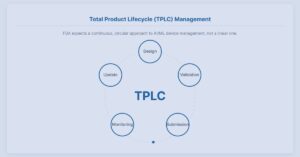
Diagram illustrating the FDA Total Product Lifecycle (TPLC) management approach for AI and machine learning devices, showing a continuous cycle of design, validation, submission, monitoring, and update.

FDA AI Guidance 2025 Interactive Visualizer

Explore how FDA’s 2025 AI guidance shapes lifecycle oversight for AI-enabled medical software through interactive regulatory scenarios....

Media Inquiries

Need a quote, speaker, or more info about Cyntegrity? Reach out directly to our media contact for timely assistance.

QTLs for Clinical Trials

QTLs for Clinical Trials

▶ Watch the conversation