Clinical trial protocols have become steadily more complex over the past two decades. New research published in Applied Clinical Trials by Cyntegrity CEO Dr. Artem Andrianov provides one of the largest longitudinal analyses to date, examining more than 190,000 clinical studies conducted between 2004 and 2025. The findings reinforce a challenge that many sponsors and CROs already experience every day: increasing protocol complexity demands a more proportionate, evidence-based approach to clinical trial oversight.
The analysis highlights several long-term trends:
Importantly, these trends are not simply making protocols longer. They increase the number of critical decisions that study teams must make throughout the lifecycle of a trial, from protocol design through monitoring and quality oversight.
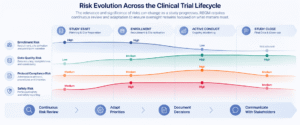
As protocol complexity increases, reviewing everything equally becomes increasingly difficult to sustain. ICH E6(R3) promotes a proportionate, risk-based approach that focuses oversight where it matters most. An effective RBQM operating model translates protocol complexity into structured, traceable actions throughout the clinical trial lifecycle.
Identify Critical-to-Quality Factors
Determine which processes, data, and endpoints are essential to participant safety, rights, and data reliability.
Perform Structured Risk Assessment
Assess protocol-specific risks based on their likelihood, impact, detectability, and available controls to prioritize oversight activities.
Define KRIs and QTLs
Establish meaningful Key Risk Indicators and Quality Tolerance Limits to monitor emerging risks throughout study execution.
Maintain Inspection-Ready Evidence
Document risk assessments, decisions, actions, and rationale with complete traceability to support regulatory inspections and continuous quality management.
Enable Targeted Oversight
Use centralized monitoring and risk-based review to focus resources on sites, subjects, and processes that require attention.
At Cyntegrity, we believe protocol complexity should not automatically lead to more manual work. Instead, complexity should drive better prioritization.
Our AI-augmented RBQM platform helps sponsors and CROs transform protocol characteristics into traceable risk assessments, monitoring strategies, centralized review activities, and ongoing risk evaluation, while keeping experts firmly in control of every decision.
Human expertise remains central. AI helps accelerate analysis, improve consistency, and provide transparent decision support rather than replacing clinical judgment.
Dr. Artem Andrianov’s full article, “Two Decades of Rising Protocol Complexity: A Longitudinal Analysis of Clinical Trial Design Evolution, 2004–2025,” is available in Applied Clinical Trials.
Need a quote, speaker, or more info about Cyntegrity? Reach out directly to our media contact for timely assistance.
Industry Solutions
Featured Insights
Start Your Roll-Out
RBQM Capability Pathway
Quick Answers